

China remains the world's largest producer of remote-control toys, and for importers, wholesalers and private-label brands the category is still one of the most dependable to build a business on. But "dependable" is not the same as "easy". Between factory selection, certification, tooling and shipping, there are a dozen places where a promising RC programme can quietly go wrong.
This guide walks through the sourcing process we follow for RC cars, trucks and construction vehicles — from the first product brief to the golden sample — and highlights the checkpoints that separate a smooth order from an expensive lesson.
Why RC toys remain a strong import category
Remote-control vehicles sit in a useful middle ground for buyers: they carry higher perceived value than a simple plastic figure, yet they are still light enough to ship economically and versatile enough to be re-skinned for many markets.
- Repeat purchase behaviour. Children who own one RC car tend to want a second — a different scale, a different body, or a stunt model that flips and climbs.
- Wide price ladder. The same factory platform can be sold as a budget 1:28 mini car or a premium 2.4G hobby-grade truck, which lets one supplier serve several retail tiers.
- Strong gifting demand. RC toys peak reliably around birthdays and the year-end season, which makes forecasting and container planning easier.
- Room for differentiation. Colourways, packaging, light kits and licensed themes all create a reason for a retailer to choose your version over a competitor's.
Step 1 — Write a product brief before you ask for quotes
The single biggest cause of a disappointing first sample is a vague brief. "A remote-control car for kids" will get you whatever the factory already has on the shelf. Instead, specify the variables that actually change cost:
- Scale and dimensions (for example 1:16, 1:28, or a fixed length in centimetres)
- Drive type — two-wheel drive, four-wheel drive, or a stunt platform that drives on both sides
- Control frequency — 2.4G is now the default for anything sold at a premium
- Battery and charging — removable pack versus built-in, USB versus wall charger
- Target retail price and target age band
- Target certifications for your market
A brief that answers these six points lets a factory quote accurately on the first pass, and it gives you a fair basis for comparing suppliers.
If two factories quote very different prices for the "same" product, the brief was not specific enough. Re-quote against a written specification before you assume one is cheaper.
Step 2 — Understand MOQ, tooling and unit cost
Minimum order quantity, tooling and unit price move together. A new body shell requires a mould; an existing mould does not. Knowing which one you are paying for is the difference between a fair quote and an inflated one.
| Scenario | Typical MOQ | Tooling | Best for |
|---|---|---|---|
| Existing model, existing colourway | 500–1,000 pcs | None | First order, market testing |
| Existing model, custom colour or packaging | 1,000–3,000 pcs | Packaging only | Private label launch |
| New body shell on existing chassis | 3,000+ pcs | Mould required | Differentiated product line |
| Fully new platform | 5,000+ pcs | Multiple moulds | Established brands with volume |
Always ask for the tooling cost separately from the unit price. A factory that hides tooling inside the unit cost makes it very hard to compare a 1,000-piece order against a 5,000-piece one.
Step 3 — Verify certifications, not promises
"CE certified" is a phrase, not a document. For toys, the paperwork must be specific to the product and the market. Ask for the actual test report, and check that the model number on the report matches the model you are buying.
- EN 71 — the European toy safety standard, covering mechanical, chemical and flammability requirements.
- ASTM F963 — the US toy safety specification, required for the North American market.
- CPSIA — US children's product safety rules, including tracking labels.
- CE marking — the declaration that a product meets the applicable EU directives.
- RoHS and REACH — restrictions on hazardous substances and chemicals.
- Battery and UN38.3 documentation — essential for any product with a lithium cell, and required by most carriers.
If a supplier cannot produce a test report for the exact model, treat the product as uncertified until proven otherwise. Re-testing is inexpensive compared to a recall or a customs hold.
Step 4 — Sampling: from prototype to golden sample
Sampling is where the brief becomes physical. Expect two or three rounds. The first sample proves the concept; the second confirms your changes; the third becomes the golden sample you sign off against.
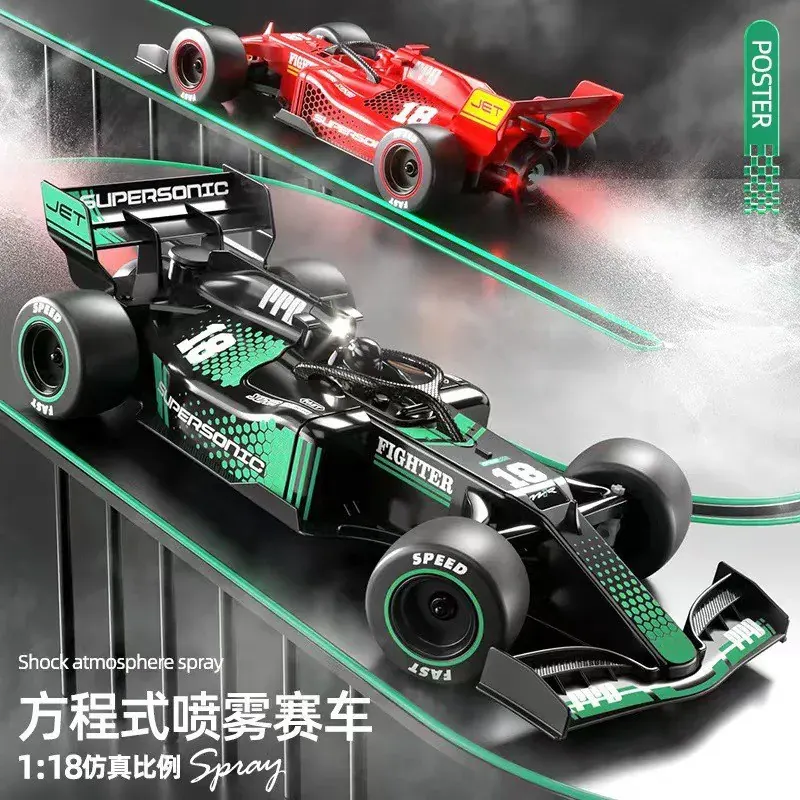
Keep the golden sample in your own office, not the factory's. When production arrives, you compare against your copy — not against whatever the factory still has on the shelf.
Step 5 — Quality control before the container ships
A pre-shipment inspection is the cheapest insurance in the entire process. Done after production and before the goods leave the factory, it catches the problems that are easy to fix on-site and expensive to fix overseas.
- Check the carton and product artwork against the approved version
- Test a random sample of units for function, range and charging
- Confirm battery capacity and that the correct charger is included
- Verify the age warning and tracking label on every retail box
- Photograph the inspection so you have evidence for any dispute
If your order is large enough to justify it, ask for an inspection at the mid-production stage as well. Catching a moulding fault halfway through is far cheaper than discovering it in the finished goods.
Step 6 — Packaging, branding and private label
Packaging is often the fastest route to a differentiated product without paying for new tooling. A bilingual gift box, a branded controller and a printed instruction sheet can lift perceived value considerably at a modest cost.
Bring your designer into the process early. Print-ready artwork needs the factory's dieline, and the dieline needs to match the final product dimensions — which are not locked until the sample is approved. Doing these in the wrong order causes expensive reprints.
Step 7 — Shipping and lead times
Plan around three clocks: production, inland transport to port, and the ocean or air leg. Factories quote production time, but the total door-to-door timeline is usually longer than buyers expect.
- Production: typically 20–35 days for an existing model, longer for new tooling
- Sea freight: commonly 25–40 days depending on the destination port
- Air freight: days rather than weeks, but only economical for small, high-value shipments
For a first order, add a buffer. A 30-day production window quoted in good faith can become 45 days when a component is delayed, and a retailer waiting on a seasonal launch cannot absorb that slip.
Key takeaways
- Write a specific brief — scale, drive type, battery, target price, target market.
- Separate tooling cost from unit cost so quotes are comparable.
- Verify certifications against the exact model, and keep the test reports on file.
- Sign off a golden sample and keep your own reference copy.
- Inspect before the container ships, not after it arrives.
Sourcing RC toys well is less about finding the cheapest quote and more about controlling the checkpoints. A buyer who manages the brief, the sample and the inspection has already removed most of the risk before the first container leaves the port.